Click here if you’re looking for information on Dorset Police.
Sexual Violence
- Every year 100,000 adults are raped into the UK (around 12000 men and 85000 women). 9 times out of 10 the perpetrator is already known to the victim.
- In the UK 1 in 4 women, 1 in 6 children and 1 in 18 men are subjected to sexual assault or abuse but the majority of these cases are not reported to the police.
- Of those who report even the most serious crime of rape, less than 1 in 100 secure a conviction. In fact, less than less than 3 in 100 even see a suspect charged. Conviction rates are lower today than they were in the 1970s and in parts of the UK, up to quarter of reported rapes are not even being recorded as crimes.
- Dorset Police has one of the UK’s worst conviction rates even though sex offenses are the most common kind reported in the county. Over the past 10 years, the number of sex offenses reported to them has doubled but the number of charges they bring has halved and the force still has no specialist rape unit.
- According to data obtained by Justice for Gaia via a Freedom of Information request, of 2058 sexual offences recorded by the Dorset Police 2019-2020, only 46 resulted in criminal charges. In 2020 they only pressed charges in 28 of the 782 rape reports they received.
Healthcare
- The impact of a decade of austerity cuts on public services had already been linked to over 130,000 preventable deaths in the UK by 2019. Since 2012, hundreds of vulnerable patients have died following failings by health bodies related to poor, inadequate or delayed care.
- The Association of Child Psychotherapists identifies a ‘silent catastrophe’ in child and adolescent mental health services. Support on the NHS, especially in terms of specialist or acute services, is becoming increasingly difficult to access. The result has been rising suicide rates and countless people with nowhere else to go into placed they cannot receive appropriate care, such as police custody and hospitals which increases pressure on A&E departments. 75% of mental health issues develop under the age of 24, often as a result of trauma, yet young people’s services receive less than 7% of mental health funding.
Sexual Violence & Mental Health
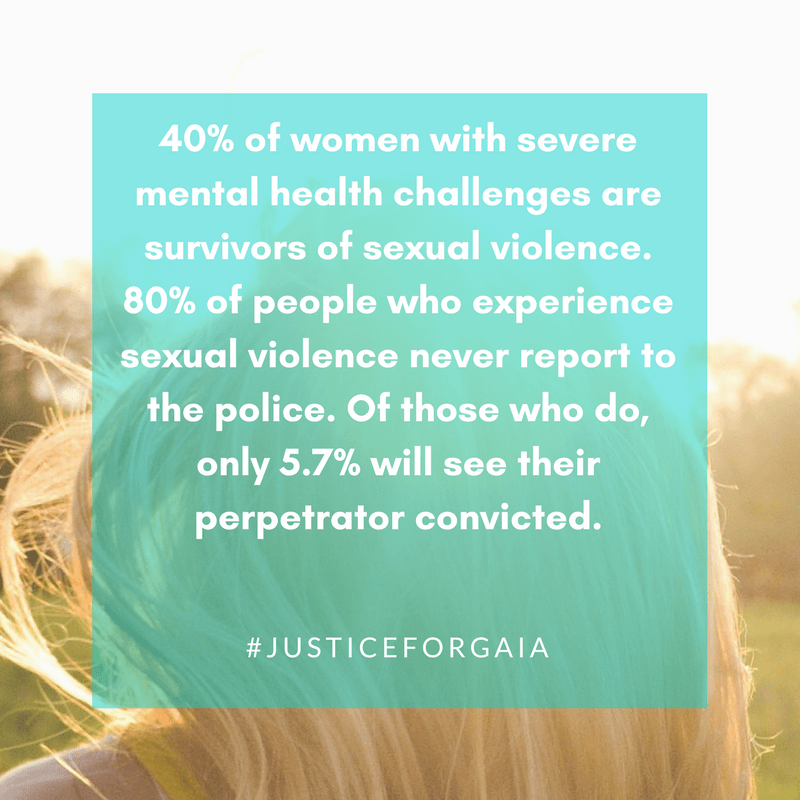
Almost half of women who experience severe mental distress are survivors of sexual violence. Yet, the support they need to rebuild their lives has become what the women’s movement describes as “a privilege determined by a postcode lottery.” Just 20% of rape crisis services are still fully funded, many have been forced to shut down or close their waiting lists, with survivors waiting up to 18 months for counselling.
The more you need support to access justice, the less likely you are to get it. People with mental health issues are 40% less likely to have their case referred for prosecution. Those with learning difficulties see their chances reduced by 67%.
Misogyny is systemic within the NHS as well as the police and as a result, the mental health system is often not a safe place for survivors. Studies suggest that 8 in 10 women and girls who turn to the NHS for help with the trauma of rape are diagnosed with a mental illness within three months and pathologising the trauma of abuse as a symptom can be damaging and dangerous. Sexual abuse and harassment is also rampant within the mental health system. Between 2019 and 2024 there were 20,000 reports made in more than half of NHS mental health trusts.
Intersecting Oppression
- Structural inequality throughout the state and society means that harm is multiplied for survivors impacted by multiple forms of oppression, such as those who are LGBTQ, Black and minoritised, disabled or neurodiverse.
- Intersecting experiences of oppression also increase your risk of experiencing sexual violence in the first place. 47% of trans people will encounter sexual violence or rape in their lifetime, with Black and Latinx trans women being 53% more likely to suffer at the hands of such life-altering crimes.
- These structural inequalities continue to shape survivors’ experiences with the criminal justice system. The more you need support to access justice, the less likely you are to get it. People with mental health issues are 40% less likely to have their case referred for prosecution. Those with learning difficulties see their chances reduced by 67%.
- Racism and other forms of discrimination in healthcare throws up extra barriers to healing and support. Meanwhile, trans and non-binary survivors often excluded from women and male only shelters and services are placed at greater risk of street homelessness and further trauma by the lack of funding for specialist services.
Learn More
To learn more about families like us fighting for truth, justice and accountability after losing someone they love in state care or in detention, visit INQUEST.
To learn more about sexual and domestic violence, support for survivors and campaigns for change, check out these amazing organisations:
On mental health and healthcare inequality, we recommend the work of:
- The National Survivor User Network (NSUN)
- Disabled People Against the Cuts (DPAC)
- Recovery In The Bin
Recommended Reading
- CWJ Manifesto: Male Violence Against Women And Girls – What Needs To Change In The Criminal Justice System.
- The Decriminalisation of Rape: why the justice system is failing survivors and what needs to change.
- Holding It Together: the courage, resilience and innovation Rape Crisis Centres during the Covid-19 pandemic.
- The Impact of the Dual Pandemics: Violence Against Women and Girls and Covid-19 on Black and Minoritised Women and Girls.
- Attitudes to Sexual Consent: research for the End Violence Against Women Coalition by YouGov.
- A Bill for Survivors: Womens Aid’s case for a bill to transform the national response to domestic abuse.
- The Changing Landscape of Domestic and Sexual Violence Services: all party parliamentary group on domestic and sexual violence inquiry.
- Supporting Transgender Survivors of sexual violence: learning from users’ experiences
 Justice For Gaia